


 русский
 Español
Enhancing Manufacturing Efficiency with Rotary Transfer Machine Multi-Spindles for Precision Production
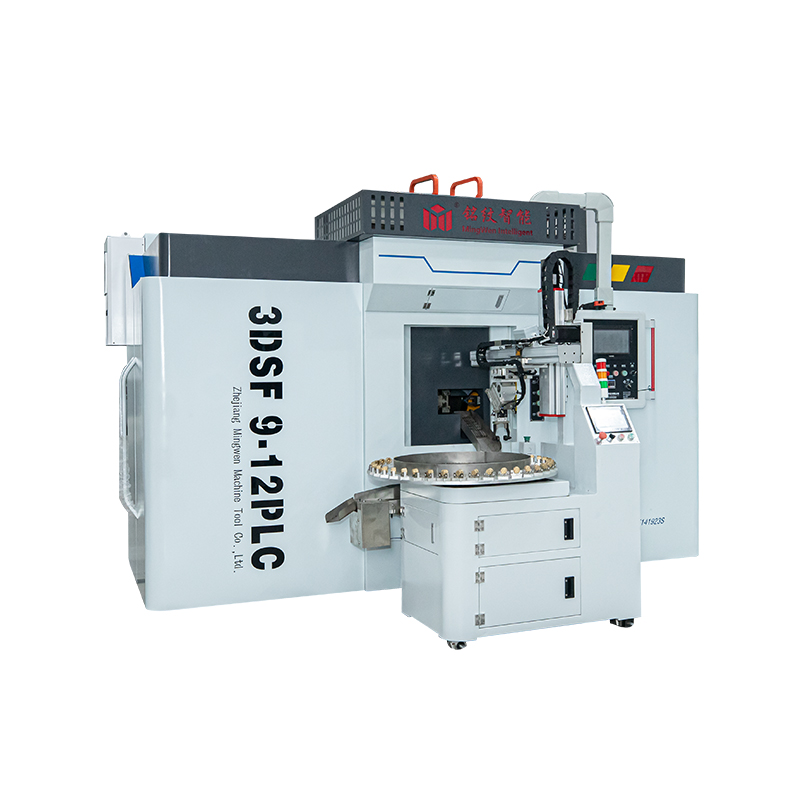
As manufacturers face increasing pressure to improve production efficiency, reduce manual operations, and maintain consistent part quality, advanced machining equipment has become an important factor in production planning. Rotary Transfer Machine Multi-Spindles are designed to support high-volume manufacturing by combining multiple machining processes into one integrated system. For companies producing automotive components, hydraulic parts, and precision metal products, this technology helps optimize workflow, improve process stability, and meet demanding production requirements.
Improving Productivity Through Integrated Machining
Many manufacturers still rely on multiple standalone machines to complete drilling, milling, tapping, and other machining operations. This approach can increase setup time, require additional material handling, and create more quality inspection points.
A multi-spindle rotary transfer machine allows different machining operations to be arranged across multiple stations. By reducing repeated positioning and transfers, manufacturers can achieve a more continuous production process while maintaining consistent component accuracy.
This integrated machining method is particularly suitable for industries that require large quantities of similar parts with stable quality standards.
Optimizing Multi-Spindle Design for Different Applications
The performance of a rotary transfer system depends greatly on spindle configuration, tooling arrangement, and process planning. Engineers need to consider part structure, material characteristics, machining sequence, and production requirements before selecting the right machine design.
Key factors include:
- Number of machining stations required
- Combination of cutting operations
- Tool accessibility and replacement efficiency
- Compatibility with automatic loading systems
A properly configured multi-spindle system helps manufacturers create a smoother production process and reduce unnecessary downtime caused by complex machining procedures.
Supporting Automation and Smart Manufacturing Goals
Automation has become an important consideration for global manufacturers looking to improve production management. Modern factories are paying more attention to equipment that can connect with automated handling systems, production monitoring tools, and digital management platforms.
For companies investing in a Rotary Transfer Machine Multi-Spindles solution, automation compatibility can provide advantages such as:
- Reduced dependence on manual handling
- More stable production cycles
- Easier process tracking
- Better coordination between equipment and factory systems
These capabilities allow manufacturers to build more efficient production environments while preparing for future manufacturing upgrades.
Reducing Quality Risks During Mass Production
Maintaining consistent quality in high-volume machining is a common challenge for production teams. Frequent repositioning between different machines may cause variations in accuracy and increase process control difficulties.
With multi-spindle rotary transfer equipment, multiple operations can be completed within a controlled machining sequence. This reduces unnecessary handling steps and supports more stable production results, especially for components with complex machining requirements.
Customized Solutions for Industry Requirements
Different manufacturing industries have unique expectations for machining equipment. Automotive suppliers may focus on production efficiency, while industrial component manufacturers may require flexible processing options for different part designs.
As a manufacturer, developing equipment based on real production conditions is essential. Machine planning should consider component dimensions, machining processes, tooling requirements, and future product changes.
Building Reliable Machining Solutions for Future Production
As manufacturing continues to move toward automation and precision-focused production, companies need machining equipment that can support both current operations and future development. A well-designed Rotary Transfer Machine Multi-Spindles system provides an effective approach for manufacturers seeking integrated machining processes, stable production performance, and improved workflow management.
By combining multi-process capability, flexible configuration, and automation support, rotary transfer technology helps global manufacturers respond to changing production demands while maintaining efficient and reliable manufacturing operations.

- No.1-2,24th Street, Eastern New District, Wenling City.Zhejiang Province
-
+86-13906540425
+86-13566858277
+86-576-87168388
+86-13757649712 - +86-576-87168398
- [email protected]
[email protected]
 Privacy