


 русский
 Español
Reducing Production Bottlenecks with Advanced Rotary Transfer Machine Multi-Spindles for Industrial Components
In global manufacturing, production efficiency is no longer only about increasing machine speed. Buyers and engineers are paying more attention to process stability, machining consistency, and equipment adaptability when investing in new production systems. As a machining equipment manufacturer, we have observed growing interest in Rotary Transfer Machine Multi-Spindles among companies producing automotive parts, hydraulic components, electronic hardware, and precision metal products. These manufacturers are seeking solutions that can simplify complex machining processes, improve workflow management, and support stable long-term production.
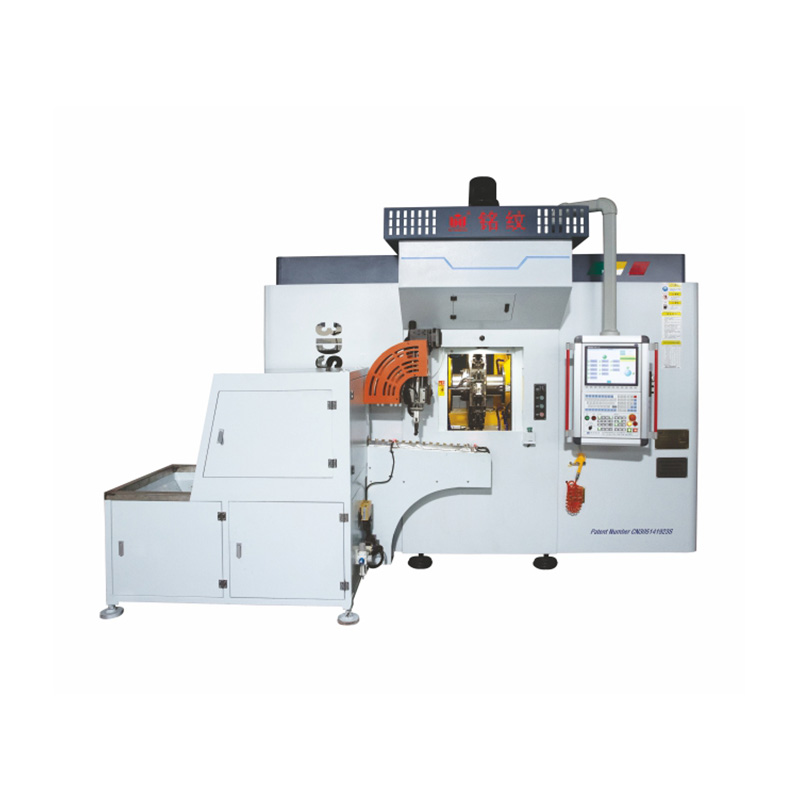
Solving Complex Machining Processes with Integrated Production
Many factories still depend on several independent machines to complete different machining operations. Although this approach can handle various parts, it often creates challenges such as repeated fixture adjustments, additional transportation between machines, and more inspection procedures.
A multi-spindle rotary transfer system combines multiple machining stations into one production line. Operations including drilling, milling, turning, and tapping can be arranged according to the component structure and manufacturing requirements. This integrated method helps manufacturers reduce unnecessary movement and create a smoother production sequence for high-volume applications.
Improving Component Consistency Through One-Time Clamping
For precision component manufacturers, maintaining stable dimensions across large production batches is a major concern. When parts are transferred between different machines, positioning differences may influence machining accuracy and increase process control difficulty.
Rotary Transfer Machine Multi-Spindles support one-time clamping production methods, allowing multiple machining steps to be completed while the workpiece remains securely positioned. This structure helps improve feature alignment and reduces variation caused by repeated setups.
From our manufacturing perspective, engineers should evaluate fixture design, machining sequence, and tooling arrangement together to achieve reliable production results.
Optimizing Equipment Configuration for Different Industries
Every manufacturing application has different requirements. A machine configuration suitable for automotive components may not match the needs of medical parts or industrial fittings.
Before selecting equipment, buyers usually need to review several important factors:
- Component shape and material characteristics.
- Required machining operations.
- Production volume expectations.
- Tooling flexibility requirements.
- Automation connection possibilities.
By analyzing these factors in advance, manufacturers can avoid unnecessary equipment adjustments after installation and create a production system that matches actual factory conditions.
Supporting Automation Upgrades in Modern Factories
Automation integration has become an important consideration in equipment purchasing decisions. Many manufacturers are upgrading their production lines with automatic loading systems, monitoring functions, and digital management tools to improve operational control.
Modern rotary transfer solutions can be designed with automation compatibility, allowing production teams to monitor machine status and manage processes more efficiently. This is especially valuable for companies aiming to reduce manual operations while maintaining consistent manufacturing performance.
Reducing Maintenance Challenges Through Proper Machine Design
Equipment reliability depends not only on machine structure but also on maintenance planning and component accessibility. Unexpected downtime can affect delivery schedules and increase production pressure.
When developing machining solutions, manufacturers should consider:
- Easy access for tooling replacement.
- Clear maintenance procedures.
- Stable mechanical structures.
- Suitable cooling and lubrication systems.
- Operator-friendly control interfaces.
A well-designed machine helps customers manage daily production more effectively and supports continuous operation.
Building Long-Term Value Through Professional Manufacturing Support
Purchasing machining equipment is a long-term investment that requires technical communication and reliable supplier support. As a manufacturer, we focus on understanding customer production goals and providing suitable Rotary Transfer Machine Multi-Spindles solutions based on real machining requirements.
Through professional engineering assistance, customized configurations, and production-focused design, we help global manufacturers improve efficiency, maintain consistent quality, and develop more competitive manufacturing capabilities. For companies searching for advanced machining equipment, choosing the right multi-spindle rotary transfer solution can support future production growth and operational improvement.

- No.1-2,24th Street, Eastern New District, Wenling City.Zhejiang Province
-
+86-13906540425
+86-13566858277
+86-576-87168388
+86-13757649712 - +86-576-87168398
- [email protected]
[email protected]
 Privacy