


 русский
 Español
Rotary Transfer Machine Hydraulic Systems Support Automated Production Lines
Manufacturing industries continue moving toward automated production methods that support stable machining and organized workflow management. In many industrial sectors, the Rotary Transfer Machine Hydraulic system is used for processing hydraulic fittings, valve bodies, manifolds, and metal connectors. These machines combine rotary indexing technology with hydraulic control systems, allowing multiple machining operations to be completed within one production cycle.
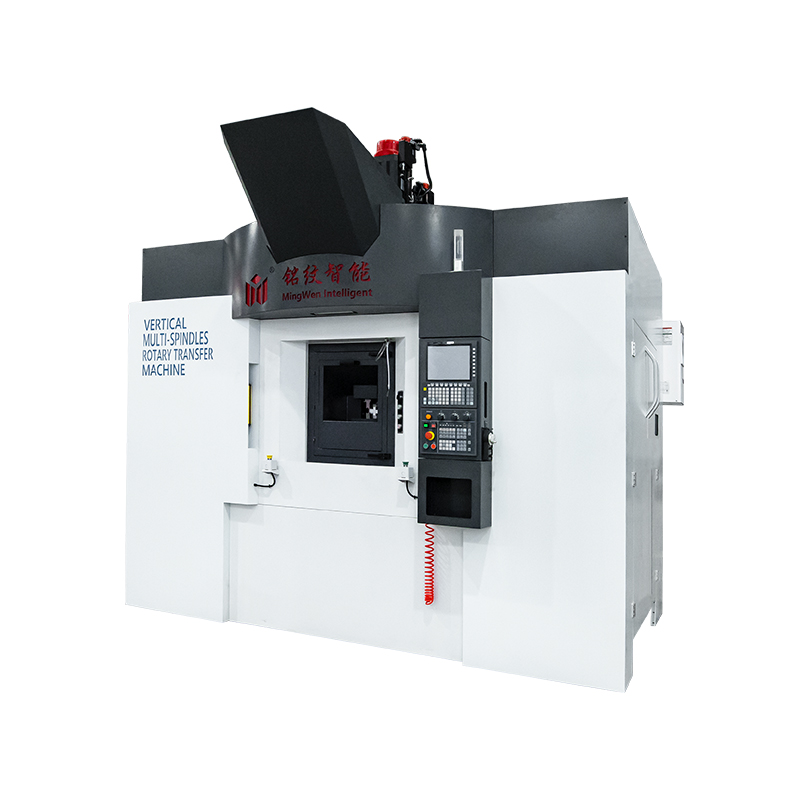
As factories handle increasing production requirements, many companies are looking for equipment that can support continuous operation while reducing unnecessary manual handling. Rotary transfer machines are commonly selected for applications involving repeated drilling, tapping, milling, and chamfering operations. Their multi-station structure allows different machining procedures to take place in sequence, helping manufacturers maintain smoother production flow.
Hydraulic Systems Support Stable Operation
Hydraulic systems are an important part of rotary transfer machines because they help control clamping, positioning, and indexing movement. During machining, hydraulic pressure supports stable fixture holding, helping workpieces remain properly aligned throughout the cutting process.
This is especially important for hydraulic components that contain multiple holes and threaded sections. Valve bodies and hydraulic manifolds often require accurate positioning because small deviations may affect assembly performance later in the production process.
Hydraulic systems also support controlled movement when the rotary table transfers workpieces between machining stations. Smooth indexing movement helps maintain consistent operation during continuous production cycles.
In many manufacturing workshops, machines operate for long hours each day. Hydraulic control systems assist with maintaining stable machine movement during repeated machining procedures.
Automation Helps Reduce Manual Handling
Many factories are introducing automation equipment to improve production organization and reduce repetitive labor tasks. Rotary transfer machines can be connected with automatic loading systems, robotic arms, conveyors, and unloading equipment.
Automatic material feeding systems transfer raw workpieces into machining stations without repeated manual positioning. After machining is completed, finished components can move automatically toward inspection or packaging areas.
This production arrangement helps reduce unnecessary interruptions while supporting smoother workflow coordination across the production line. Automated systems are especially useful for factories producing medium or large quantities of hydraulic fittings and industrial metal components.
Chip conveyors and coolant circulation systems can also be integrated into the production process. These systems help maintain cleaner machining environments during long operating periods.
Multi-Station Processing Supports Production Efficiency
Rotary transfer machines are widely used because they allow several machining operations to take place within one machine structure. Different stations can perform drilling, tapping, milling, or reaming procedures simultaneously.
Instead of transferring parts between separate machines, the rotary indexing table guides workpieces through each machining stage in sequence. This arrangement supports more compact production layouts and an organized machining flow.
Industries producing hydraulic connectors, pipe fittings, and automotive metal components frequently use multi-station machining systems for repeated production tasks. Hydraulic systems help maintain stable workpiece positioning during each stage of machining.
Smart Manufacturing Trends Continue to Develop
Modern manufacturing environments increasingly use monitoring systems to observe machine conditions during operation. Rotary transfer machines are now commonly integrated with sensors that monitor hydraulic pressure, spindle condition, and machine movement.
Servo hydraulic systems are also becoming more common because they support responsive movement control and energy management. Some factories use digital monitoring systems to organize maintenance schedules and observe machine performance remotely.
Manufacturers are also paying more attention to flexible production requirements. Adjustable tooling systems and modular station layouts allow machines to adapt more easily to different product designs and machining procedures.
Rotary transfer machines equipped with hydraulic systems continue to support automated manufacturing environments where continuous machining, stable operation, and organized production flow remain important requirements.

- No.1-2,24th Street, Eastern New District, Wenling City.Zhejiang Province
-
+86-13906540425
+86-13566858277
+86-576-87168388
+86-13757649712 - +86-576-87168398
- [email protected]
[email protected]
 Privacy