


 русский
 Español
How a Rotary Transfer Machine For Plumbing Parts Ensures Micron Precision
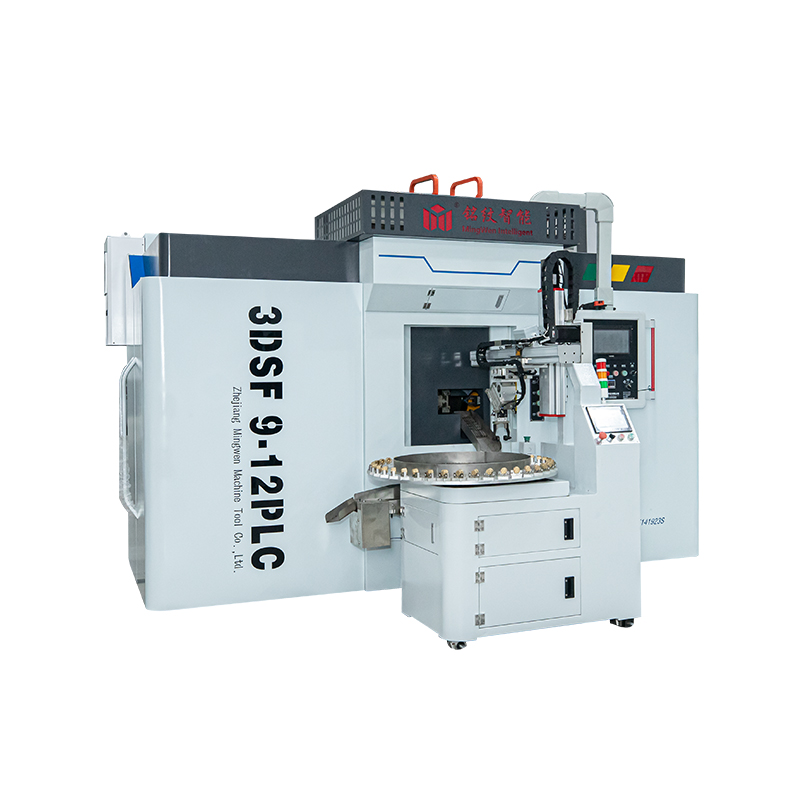
Precision is one of the important requirements in plumbing component manufacturing. Even small dimensional deviations can affect sealing performance, assembly fit, and long-term reliability. In this production environment, the Rotary Transfer Machine for Plumbing Parts is widely applied to maintain consistent machining accuracy across multiple operations.
Importance of Precision in Plumbing Components
Plumbing parts such as valves, fittings, and threaded connectors require stable dimensional control. These components often work under pressure conditions, where slight errors in diameter or alignment can leakage or improper installation.
Surface quality is also closely related to precision. A stable surface finish helps ensure better sealing performance and reduces friction during assembly. For this reason, manufacturers place strong emphasis on maintaining controlled machining conditions.
Multi-Station Structure for Controlled Accuracy
A rotary transfer machine operates through a multi-station layout. Each station is responsible for a specific machining step, such as drilling, tapping, milling, or finishing. Once the workpiece is fixed in position, it moves sequentially through each station without repeated manual repositioning.
This structure reduces cumulative positioning errors. Since the part remains in a controlled fixture system throughout the process, alignment between operations is maintained more consistently compared with multi-machine setups.
CNC Control and Process Stability
Modern rotary transfer systems are equipped with CNC-based control systems that manage machining parameters throughout the production cycle. These systems allow operators to define cutting conditions with precision and apply them repeatedly across all production cycles.
Once parameters are set, they are executed consistently for each part. This reduces variation caused by manual adjustment and helps maintain uniform machining results.
The stability of the control system also supports repeatable production. Even during long machining runs, the system maintains consistent operation across all stations.
Reduction of Repositioning Errors
Traditional machining methods often require multiple setups, where the workpiece is moved between different machines. Each repositioning introduces the possibility of alignment deviation.
In contrast, rotary transfer machining completes all operations within a single integrated system. The part is clamped once and processed through all stages without additional handling. This reduces variation caused by fixture changes and improves dimensional consistency.
Tool Coordination and Machining Sequence
Each station in the rotary system is equipped with dedicated tooling. The sequence of operations is carefully arranged to ensure that each machining step supports the next one.
For example, initial drilling operations are followed by tapping or finishing processes. This structured workflow helps maintain stability in hole positioning and thread alignment, which are critical in plumbing components.
Application in Plumbing Manufacturing
Precision requirements are especially important in valve bodies, pipe connectors, and sealing components. These parts must fit together accurately to prevent leakage and ensure proper system performance.
Rotary transfer machines are often used to produce these components in batch production environments where consistency is required across large quantities.
Process Monitoring and Maintenance
Maintaining precision over time requires consistent monitoring of machine conditions. Tool wear, spindle stability, and fixture alignment are important factors that influence final accuracy.
Regular maintenance ensures that machining performance remains stable. Proper inspection routines help reduce variation caused by mechanical wear.
Precision in plumbing manufacturing depends on stable machining systems and controlled processing conditions. A rotary transfer machine supports these requirements through integrated multi-station operation, CNC control, and reduced repositioning. These characteristics help maintain consistent accuracy across production cycles.

- No.1-2,24th Street, Eastern New District, Wenling City.Zhejiang Province
-
+86-13906540425
+86-13566858277
+86-576-87168388
+86-13757649712 - +86-576-87168398
- [email protected]
[email protected]
 Privacy