


 русский
 Español
Integrate Automation: Rotary Transfer Machine For Plumbing Part Benefits
Automation has become an important development direction in modern machining industries, especially in sectors that require continuous production and stable output quality. In plumbing component manufacturing, the Rotary Transfer Machine for Plumbing Parts is widely used to support automated workflows that connect multiple machining operations into a unified production cycle.
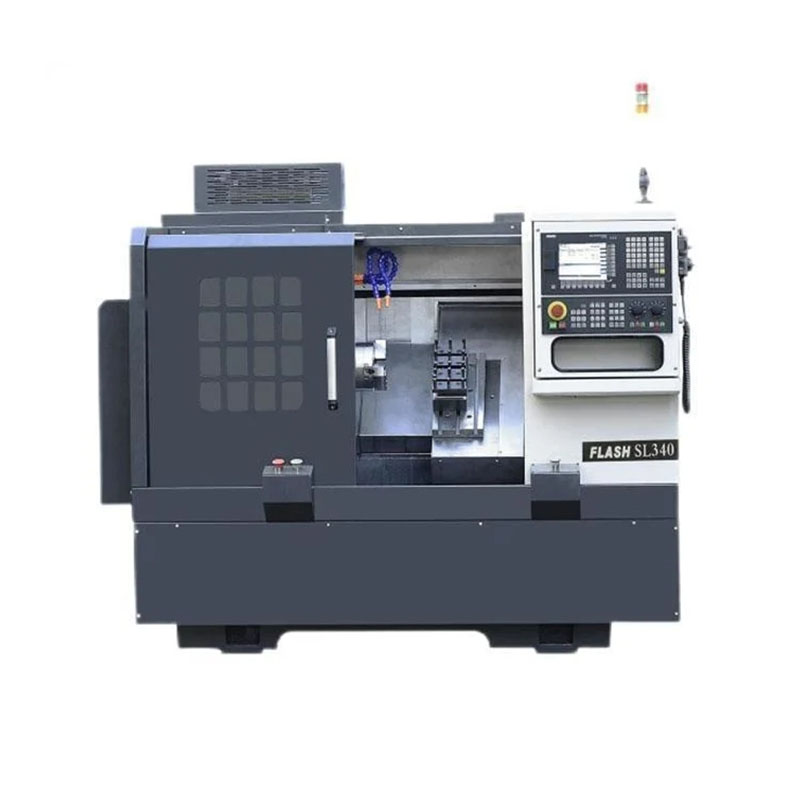
Automation in Modern Machining Environments
Automation in machining refers to the reduction of manual intervention during production processes. Instead of relying on operators to move parts between machines or repeatedly adjust settings, automated systems manage these steps through programmed sequences.
In rotary transfer systems, automation is achieved through a structured arrangement of machining stations. Each station performs a specific task, and the workpiece moves automatically from one station to the next until all operations are completed.
This continuous process allows manufacturers to maintain a stable production flow without frequent interruptions.
Multi-Station Continuous Operation
A rotary transfer machine is built around a circular platform that holds multiple machining stations. Each station is responsible for a dedicated operation such as drilling, tapping, turning, or finishing.
Once the workpiece is loaded into the system, it follows a fixed path through each station. This eliminates the need for repeated manual repositioning and helps maintain consistency throughout the machining cycle.
The continuous movement between stations ensures that production remains steady and organized, even during long operational periods.
Reduction of Manual Intervention
One of the key benefits of automation is the reduction of manual handling. In traditional machining setups, operators often need to move parts between machines, which can introduce positional variations and increase production time.
With a rotary transfer system, the part is fixed once at the beginning of the process. All machining steps are completed within the same machine, reducing handling requirements and helping maintain stable alignment across operations.
This contributes to more consistent production output and reduces the potential for human-related variation.
Integration with Auxiliary Systems
Automated rotary transfer machines can be connected with additional systems such as robotic loaders, conveyors, or feeding devices. These integrations help streamline material flow into and out of the machining system.
Such configurations allow parts to be loaded and unloaded without interrupting the machining cycle. This supports continuous operation and improves overall production organization.
Monitoring systems can also be integrated to observe machine status, helping operators track performance and identify irregular conditions during production.
Production Stability and Process Control
Automation supports more stable production by reducing variability in machining steps. Since operations are controlled through predefined sequences, each part follows the same machining path.
This helps maintain consistent dimensional results and reduces fluctuations between production batches. Stability in production is especially important for plumbing components that require precise fitting and assembly compatibility.
Resource Optimization in Manufacturing
Automated systems help optimize resource usage by reducing the need for manual labor in repetitive tasks. This allows personnel to focus more on monitoring, quality control, and system maintenance.
Production planning also becomes more structured, as automated cycles provide predictable output timing. This helps improve scheduling efficiency and workflow coordination.
Maintenance and Operational Considerations
Although automation improves production efficiency, proper maintenance is essential for long-term stable operation. Mechanical components, control systems, and lubrication units require regular inspection to ensure consistent performance.
Tool condition monitoring is also important in automated environments, especially when machines operate continuously over extended periods.
Automation plays a central role in improving consistency and efficiency in plumbing part manufacturing. Rotary transfer systems provide a structured approach to integrating multiple machining processes into a single automated workflow, supporting stable production and controlled operation.

- No.1-2,24th Street, Eastern New District, Wenling City.Zhejiang Province
-
+86-13906540425
+86-13566858277
+86-576-87168388
+86-13757649712 - +86-576-87168398
- [email protected]
[email protected]
 Privacy