


 русский
 Español
Rotary Transfer Machine For Plumbing Part Handles Complex Valve Bodies
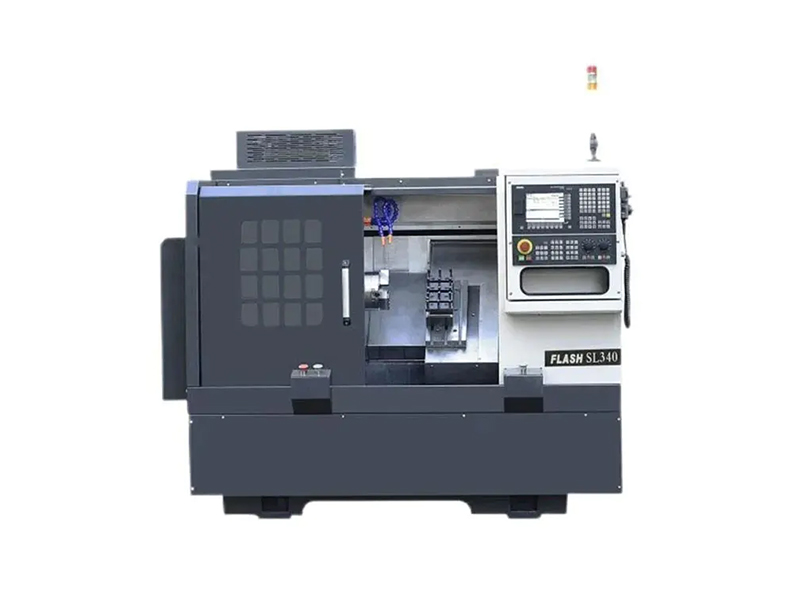
Manufacturing valve bodies in plumbing systems requires a machining process that can handle multiple geometric features within a single component. These parts often include internal channels, threaded holes, sealing surfaces, and multi-angle structures that must be precisely aligned during production. In this context, the Rotary Transfer Machine for Plumbing Parts provides a structured machining approach that supports stable and coordinated processing of complex valve body designs.
Structural Characteristics of Valve Bodies
Valve bodies are essential components in plumbing and fluid control systems. Their internal structure is designed to regulate flow direction, pressure distribution, and sealing performance. Because of this functional complexity, each valve body typically requires several machining operations, including drilling, tapping, boring, and surface finishing.
Each feature must be accurately positioned relative to others. Even slight misalignment between internal passages or threaded sections can affect sealing performance and assembly compatibility. This makes machining stability a critical requirement.
Multi-Station Machining Structure
A rotary transfer machine operates through a circular arrangement of multiple machining stations. Each station is responsible for a specific operation, allowing the workpiece to move step by step through a complete machining cycle.
Once the valve body is securely clamped at the loading station, it remains fixed throughout the entire process. It is transferred automatically from one station to the next, where each machining step is completed in sequence.
This structure reduces repeated clamping operations, which are often a source of positional variation in traditional machining methods. By maintaining a single clamping reference, the system helps improve alignment consistency across all features of the valve body.
Coordinated Tooling for Multi-Step Operations
Each station in the rotary system is equipped with dedicated tooling designed for specific machining tasks. Drilling stations create initial holes, tapping stations form threaded sections, and finishing stations refine surface quality.
The sequence of these operations is carefully arranged to ensure smooth progression from one stage to the next. This coordination helps maintain dimensional relationships between different features of the valve body.
Special fixtures are also used to support stable positioning. These fixtures are designed according to the geometry of the part, ensuring that it remains secure during each machining step.
Handling Multi-Angle Machining Requirements
Many valve bodies require machining at different angles to create internal flow channels or external connection points. Rotary transfer machines address this requirement through controlled indexing between stations.
At each station, the workpiece is positioned accurately to allow machining at the required angle. This ensures that drilled holes and internal passages remain properly aligned, even when multiple directional operations are involved.
The ability to maintain positional accuracy across different machining angles is important for ensuring functional performance in fluid control systems.
Application in Plumbing Systems
Complex valve bodies are widely used in plumbing networks, industrial piping systems, and fluid distribution equipment. These components regulate water or gas flow and must maintain consistent sealing performance under operational conditions.
Rotary transfer systems are suitable for producing such parts because they integrate multiple machining steps into a single controlled process. This helps ensure that each valve body maintains consistent structural integrity and functional alignment.
Process Stability and Repeatability
Since all machining operations are completed within one integrated system, variation caused by multiple machine setups is reduced. This contributes to stable output quality across production cycles.
Repeatability is especially important when producing valve bodies in batch quantities. Each part must maintain consistent dimensional relationships to ensure compatibility during assembly and installation.
Maintenance and Operational Stability
To maintain consistent machining performance, regular inspection of fixtures, tooling, and alignment systems is necessary. Proper maintenance ensures that positioning accuracy remains stable over time.
Cooling systems and lubrication systems also play an important role in supporting stable cutting conditions, particularly during continuous operation.
Complex valve body machining requires coordinated multi-step processing and stable positioning control. Rotary transfer machines provide a structured machining environment that supports alignment accuracy, repeatable production, and efficient workflow management in plumbing component manufacturing.

- No.1-2,24th Street, Eastern New District, Wenling City.Zhejiang Province
-
+86-13906540425
+86-13566858277
+86-576-87168388
+86-13757649712 - +86-576-87168398
- [email protected]
[email protected]
 Privacy