


 русский
 Español
Rotary Transfer Machine For Plumbing Part Fits Various Metal Materials Processing Needs
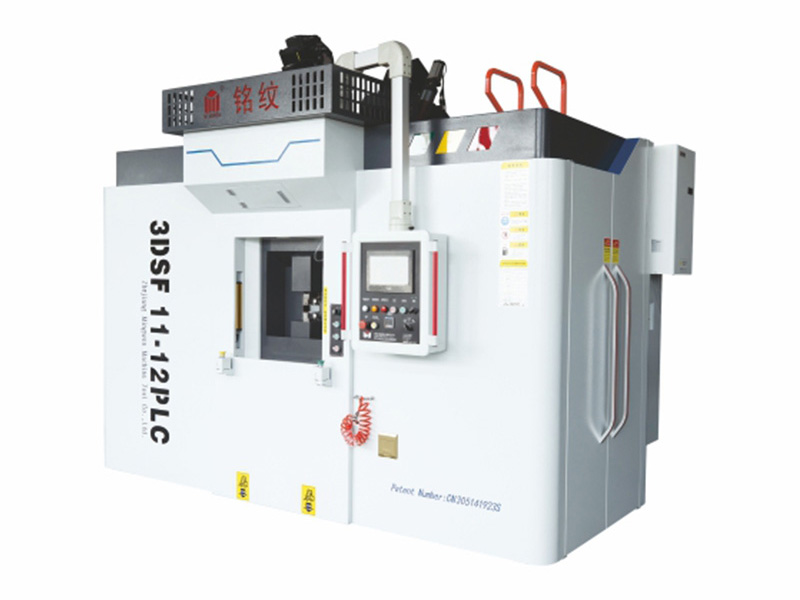
Plumbing component manufacturing involves a wide range of metal materials, each selected for specific mechanical and functional requirements. These materials differ significantly in hardness, machinability, and thermal behavior. To accommodate these variations, the Rotary Transfer Machine for Plumbing Parts is designed to support flexible machining across multiple metal types within a unified production system.
Material Diversity in Plumbing Manufacturing
Common materials used in plumbing parts include brass, stainless steel, carbon steel, and aluminum. Each material serves a distinct role in different application environments.
Brass is widely used in fittings and connectors due to its good machinability and corrosion resistance. It allows smooth cutting and efficient chip removal during machining. Stainless steel is used in applications requiring higher strength and durability, although it presents greater machining resistance.
Carbon steel provides structural strength and is often used in industrial components. Aluminum is selected for lightweight applications where ease of machining and reduced weight are important factors.
Machining Adaptation for Different Metals
Rotary transfer machines allow machining parameters to be adjusted based on material properties. Spindle speed, feed rate, cutting depth, and cooling intensity can all be modified to suit different metals.
For softer materials like brass, higher cutting speeds can be applied to improve cycle efficiency. For harder materials such as stainless steel, slower cutting speeds and more controlled feed rates are typically used to maintain stability during machining.
Tool selection is also an important factor. Different materials require different tool geometries and wear resistance levels. Carbide tools are often used for harder metals, while alternative tool types may be suitable for softer materials.
Flexible Station Configuration
The machine’s multi-station structure allows different machining processes to be arranged according to production requirements. Each station can be configured for a specific operation such as drilling, tapping, milling, or finishing.
This flexibility enables manufacturers to adjust production workflows based on product type and material requirements. It also allows different machining sequences to be implemented without requiring major equipment changes.
Production Efficiency Across Material Types
Using a single system for multiple materials helps simplify production management. Instead of operating separate machines for each metal type, manufacturers can consolidate operations within one system.
This reduces production complexity and supports more organized workflow planning. It also allows smoother transitions between different product orders, improving overall operational continuity.
Industry Applications
Rotary transfer machines are widely used in the production of plumbing fittings, valve components, and industrial connectors. These applications often require different materials depending on functional conditions such as pressure resistance, corrosion exposure, or mechanical load.
The ability to process multiple materials within one system supports a more unified production approach across diverse product categories.
Process Stability During Material Changes
Even when switching between different metals, stable machining performance can be maintained through proper parameter adjustments. Consistent control of cutting conditions helps ensure that dimensional accuracy remains stable across production cycles.
Monitoring tool wear and adjusting cooling conditions also contribute to maintaining process stability when working with different materials over extended periods.
Maintenance Considerations for Multi-Material Operation
Different materials produce different levels of heat and tool wear during machining. Regular inspection of cutting tools, lubrication systems, and cooling units helps ensure stable machine performance.
Proper maintenance practices support long-term operational consistency, especially in environments where material types frequently change.
Material diversity is a key factor in plumbing component manufacturing. Rotary transfer machines provide a flexible machining solution capable of handling multiple metals within a single system while maintaining stable production performance and consistent process control across different applications.

- No.1-2,24th Street, Eastern New District, Wenling City.Zhejiang Province
-
+86-13906540425
+86-13566858277
+86-576-87168388
+86-13757649712 - +86-576-87168398
- [email protected]
[email protected]
 Privacy