


 русский
 Español
Improving Production Flexibility with Rotary Transfer Machine Multi-Spindles in Modern Manufacturing
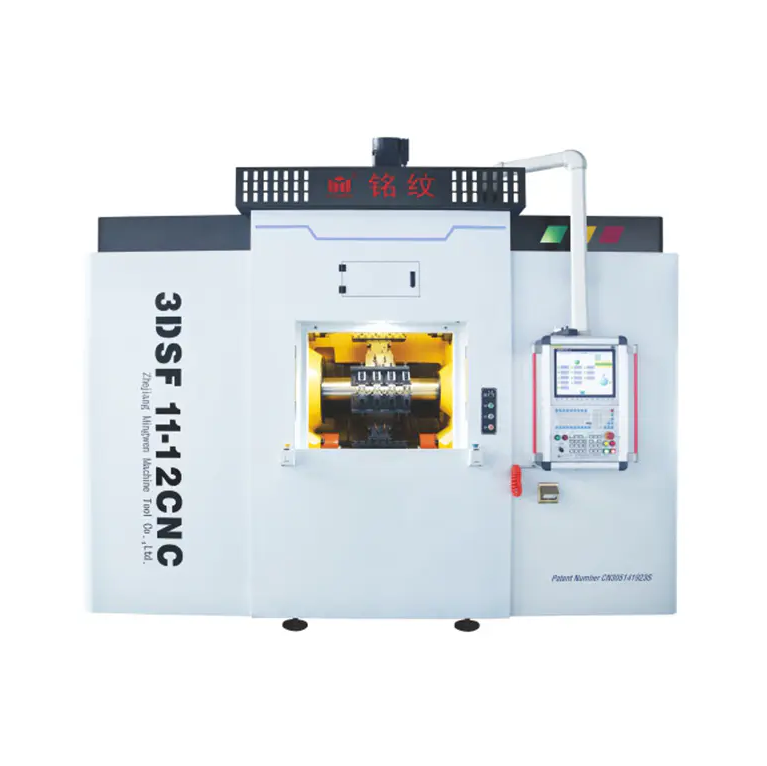
In today’s competitive manufacturing environment, companies are not only looking for faster machining equipment but also solutions that can improve production flexibility, reduce process interruptions, and maintain consistent component quality. As a machining equipment manufacturer, we have noticed that more overseas buyers are evaluating Rotary Transfer Machine Multi-Spindles for applications requiring continuous production of precision metal parts. Automotive suppliers, industrial component manufacturers, and electronics companies are increasingly focused on equipment that combines multiple machining operations with automation compatibility and reliable performance.
Meeting the Demand for More Efficient Production Systems
Manufacturers often face pressure from shorter delivery cycles, increasing labor costs, and stricter quality requirements. Traditional production methods that rely on several separate machines may create challenges in production scheduling and process control.
A multi-spindle rotary transfer machine provides an integrated machining solution by arranging multiple processing stations within one system. Different operations can be completed in a coordinated sequence, helping factories reduce unnecessary transportation between machines and simplify production management. This structure is suitable for industries that require stable output and repeatable machining results.
Reducing Setup Time Through Process Integration
One common concern among production engineers is the time required for repeated machine adjustments and workpiece repositioning. Each additional setup step may increase preparation time and create more opportunities for production variation.
With Rotary Transfer Machine Multi-Spindles, multiple machining processes can be combined into a single production workflow. The workpiece remains positioned through different machining stages, allowing manufacturers to improve process continuity.
Important advantages include:
- Fewer manual transfer steps between machines.
- Simplified production planning.
- Better control of machining sequences.
- More consistent processing conditions.
This integrated approach helps manufacturers create a smoother production environment for high-volume components.
Supporting Precision Requirements for Complex Components
Precision is a key factor when selecting industrial machining equipment. Components used in automotive systems, hydraulic equipment, and industrial assemblies often require accurate dimensions and stable repeatability during large-scale production.
When designing a machining solution, manufacturers need to evaluate:
- Material type and machining difficulty.
- Component geometry.
- Required tolerances.
- Tool arrangement.
- Production cycle requirements.
A suitable machine configuration allows engineers to balance machining efficiency and product quality without adding unnecessary complexity to the production line.
Improving Automation Compatibility in Smart Factories
Manufacturing plants worldwide are moving toward connected production systems, and equipment buyers are increasingly interested in automation-ready solutions. Modern rotary transfer technology can be integrated with CNC controls, automated loading systems, and production monitoring functions to support smarter factory operations.
For manufacturers planning future upgrades, automation compatibility is an important purchasing factor. Equipment that can connect with existing production systems provides more opportunities for process improvement and operational management.
Choosing the Right Configuration for Long-Term Production Needs
Selecting machining equipment requires more than comparing basic specifications. Different production environments have different priorities, and a suitable configuration should match the customer’s actual manufacturing process.
Before purchasing a Rotary Transfer Machine Multi-Spindles system, buyers should consider:
- Expected production volume.
- Number of required machining operations.
- Component size range.
- Tooling requirements.
- Maintenance and service support.
A professional supplier can assist engineers in evaluating these factors and developing a practical machining solution based on production goals.
Manufacturer-Focused Support for Global Buyers
As a machining equipment manufacturer, we understand that international buyers need more than equipment supply. They also require technical communication, customized engineering support, and reliable cooperation throughout the project process.
By combining application analysis, machine customization, and production-oriented design, we help customers build efficient machining systems for different industrial requirements. For companies searching for Rotary Transfer Machine Multi-Spindles, selecting a supplier with strong manufacturing knowledge and engineering capability can help create a stable foundation for future production development.

- No.1-2,24th Street, Eastern New District, Wenling City.Zhejiang Province
-
+86-13906540425
+86-13566858277
+86-576-87168388
+86-13757649712 - +86-576-87168398
- [email protected]
[email protected]
 Privacy