

 русский
 Español
Practical Operational Advantages of Servo-Driven Rotary Transfer Equipment for Mixed-Batch Precision Manufacturing
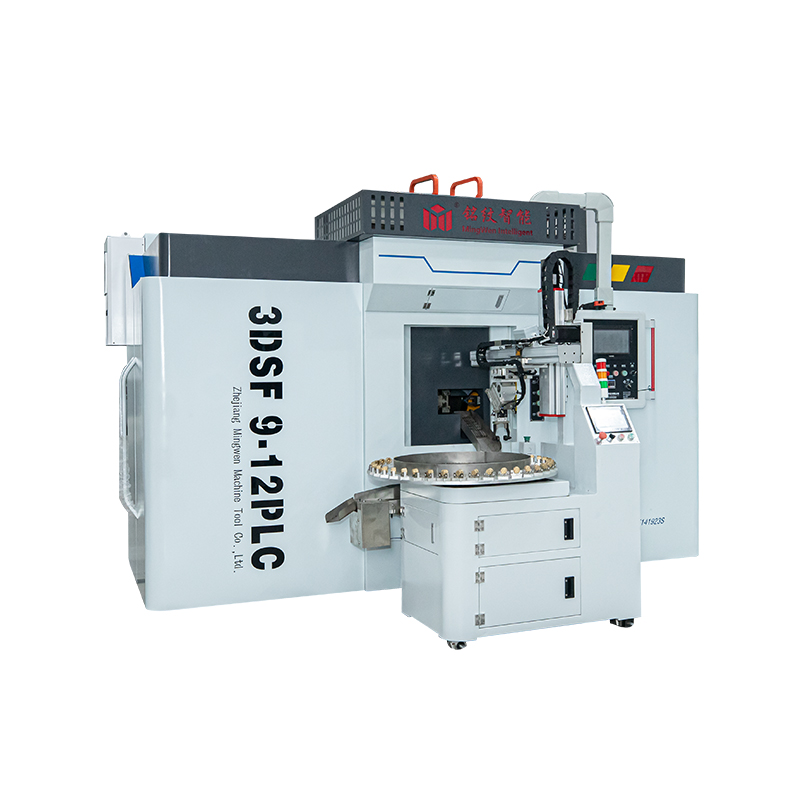
Manufacturers across automotive component, electronics assembly and medical hardware sectors are gradually shifting away from fixed-cam rotary systems. The rotary transfer machine Servo eliminates rigid indexing limitations found on traditional mechanical rotary transfer platforms, delivering flexible indexing angles, adjustable cycle speeds and consistent positioning stability for factories handling frequent product changeovers. As a professional equipment manufacturer, we communicate daily with plant engineers and procurement managers who face shared pain points: long retooling time, unstable part dimensional consistency and limited adaptability for new product lines. Below we break down practical concerns and actionable solutions based on our field commissioning experience.
Flexible Indexing Cuts Down Changeover Workloads
Many production teams waste hours modifying mechanical cams whenever launching new component models. The servo indexing system built into modern rotary transfer machines allows operators to save multiple motion profiles directly on the control panel. Instead of mechanical disassembly, technicians simply call up pre-programmed parameters. This feature brings obvious benefits to manufacturers running mixed small and medium batches, removing repeated manual adjustments and lowering human error risks during shift handovers.
Consistent Positioning Improves Long-Term Part Yield
Stable indexing repeatability directly influences finished product quality. We summarize three core servo-related maintenance practices for factory operators:
- Conduct regular encoder cable inspection to avoid signal interference in dusty workshop environments
- Fine-tune servo loop gains after every heavy-load continuous production run
Check rotary table bearing clearance periodically to prevent gradual positioning drift Small, regular checks effectively avoid unexpected scrap batches caused by slow performance degradation.
Energy Efficiency Supports Continuous Multi-Shift Production
Older mechanically driven rotary transfer equipment consumes constant power regardless of actual station operation status. The Servo fitted to rotary transfer machine only outputs required torque during indexing movement and enters low-power standby mode at stationary machining stations. Over long multi-shift operation cycles, this operating mode creates measurable energy savings while reducing continuous heat generation inside the drive cabinet.
Smooth Motion Reduces Wear on Core Mechanical Components
Sudden impact during indexing accelerates aging of turntable supports and fixture mounts. Servo-controlled acceleration and deceleration curves enable gradual speed transitions without sharp mechanical shocks. Factories using servo rotary transfer setups report extended service intervals for key transmission parts, which lowers recurring spare part procurement expenses year after year.
Simplified Digital Connection With Factory Automation Systems
Current manufacturing workflows increasingly require machine data to connect with MES, quality inspection stations and upstream feeding equipment. Our servo system supports mainstream industrial communication protocols, enabling seamless data exchange without complicated additional conversion modules. Engineers can collect real-time indexing cycle data, alarm logs and operation records for production performance analysis.
Clear Upgrade Routes for Existing Production Lines
Not every factory plans full machine replacement immediately. Our technical team offers targeted retrofit solutions that install servo indexing units onto compatible legacy rotary transfer frames. This balanced approach helps businesses achieve flexible motion control without the full investment of brand-new equipment, ideal for companies testing market demand for new product series before large-scale line expansion.
For modern factories pursuing balanced productivity and flexibility, the rotary transfer machine Servo remains a reliable solution to bridge high-volume output and multi-product adaptability. Whether you plan new production line layout or consider upgrading existing rotary transfer equipment, our engineering team can provide tailored motion scheme evaluation based on your component specifications, batch scale and workshop layout conditions.

- No.1-2,24th Street, Eastern New District, Wenling City.Zhejiang Province
-
+86-13906540425
+86-13566858277
+86-576-87168388
+86-13757649712 - +86-576-87168398
- [email protected]
[email protected]
 Privacy