


 русский
 Español
Reducing Machining Bottlenecks with Multi-Spindle Rotary Transfer Technology
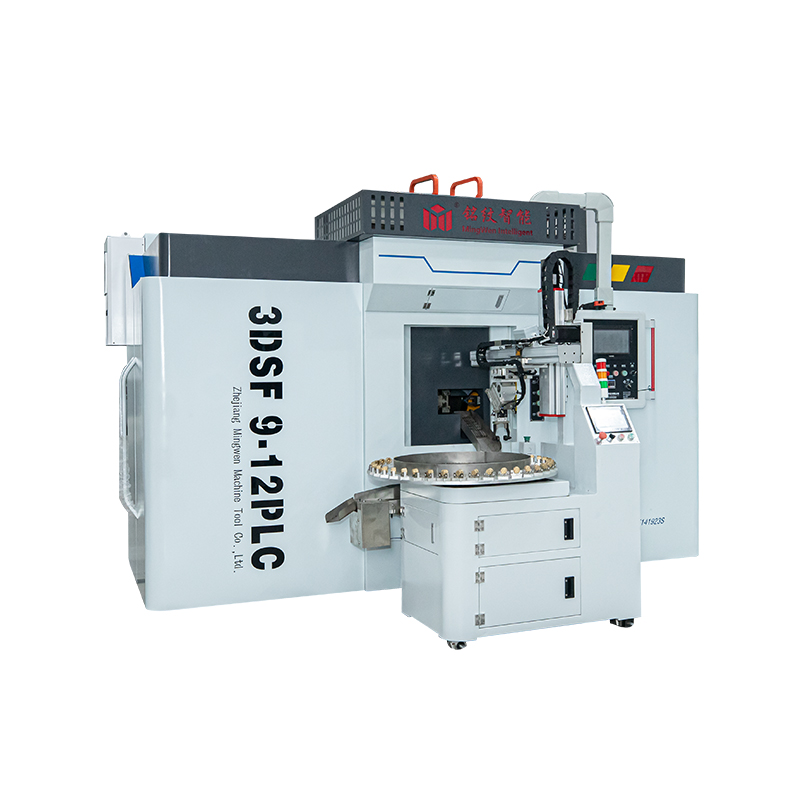
Rotary Transfer Machine Multi-Spindles technology is drawing attention from manufacturers seeking more practical ways to handle repetitive machining operations. When a component requires drilling, milling, tapping, boring, or similar processes, moving it between separate machines can create additional handling and setup work. A well-planned rotary transfer system brings multiple operations into a coordinated production flow, helping manufacturers address consistency, workflow organization, and machining efficiency from the equipment design stage.
Tackling Repeated Workpiece Handling
In conventional production, a component may need to travel between several machines before reaching its finished condition. Every additional transfer can involve workholding changes, operator intervention, and process checks.
A rotary transfer machine uses an indexing table to move workpieces through a defined sequence of machining stations. This approach can make the production route more structured, particularly for components with repeatable geometries and stable processing requirements.
Making Multi-Spindle Machining More Practical
The multi-spindle configuration is useful when several machining operations need to be completed as part of the same production cycle. Different spindle stations can be arranged according to the component's processing sequence, allowing engineers to combine operations that would otherwise be distributed across separate equipment.
This can help reduce unnecessary movement while creating a clearer relationship between tooling, workholding, and each machining step.
Reducing Setup-Related Variation
Frequent fixture changes can become a concern when machining accuracy depends on maintaining a consistent workpiece position. By integrating several operations into one rotary transfer process, manufacturers can reduce the number of times a component needs to be manually repositioned.
For production teams, this means the machine configuration becomes part of the quality-control strategy rather than simply a way to increase machining capacity.
Selecting the Right Application
A rotary transfer system is not suitable for every type of component. Engineers should evaluate whether the part has a repeatable production pattern and whether its machining operations can be logically distributed across indexed stations.
Key factors include:
- Part geometry and machining directions.
- Material and cutting conditions.
- Number of required operations.
- Workholding and fixture requirements.
- Tool access and chip evacuation.
- Inspection and process-control requirements.
Reviewing these factors before equipment selection helps manufacturers avoid building a production system around an unsuitable process concept.
Connecting Machining with Automation
Modern machining lines increasingly combine cutting equipment with automated loading, unloading, material handling, and process monitoring.
A rotary transfer machine can provide a structured foundation for these automation functions because the workpiece follows a defined production route. When automation is planned together with machining and inspection requirements, manufacturers can create a more coordinated workflow instead of adding automation after the machine has already been selected.
What Overseas Buyers Should Prepare
For international buyers, providing detailed application information is essential when discussing a customized machining system with a manufacturer.
Part drawings, materials, machining operations, tolerance requirements, tooling preferences, and production objectives give engineers a clearer basis for equipment planning. This also allows the manufacturer to evaluate fixture concepts, station layouts, spindle arrangements, and automation requirements before finalizing the machine configuration.
Building a More Organized Production Process
Rotary Transfer Machine Multi-Spindles technology can provide a practical solution for manufacturers dealing with repeatable components and multiple machining operations.
By integrating indexed workholding, multiple spindle stations, and coordinated processing into one production system, manufacturers can reduce unnecessary handling and create a more controlled workflow. For buyers planning a new automated machining line, discussing the complete production process with an experienced machine manufacturer is an important step toward developing equipment that fits the actual application.

- No.1-2,24th Street, Eastern New District, Wenling City.Zhejiang Province
-
+86-13906540425
+86-13566858277
+86-576-87168388
+86-13757649712 - +86-576-87168398
- [email protected]
[email protected]
 Privacy