


 русский
 Español
Rotary Transfer Machine For Aluminum Parts Supports Multi-Operation Machining in Modern Manufacturing
Aluminum components are widely used across transportation systems, industrial equipment, energy devices, and precision assemblies. As product structures become more integrated and functional requirements increase, manufacturers place greater attention on machining efficiency and process stability. In this context, the Rotary Transfer Machine for Aluminum Parts plays a significant role in supporting continuous and multi-step machining requirements, especially when production involves repetitive and standardized components.
At the same time, equipment development for different industrial sectors continues to expand. Rotary Transfer Machine For Gas Appliances is also widely applied in the production of gas-related components that require stable machining quality and consistent dimensional control. Although these two applications serve different industries, they share similar expectations in terms of machining accuracy, process integration, and production continuity.
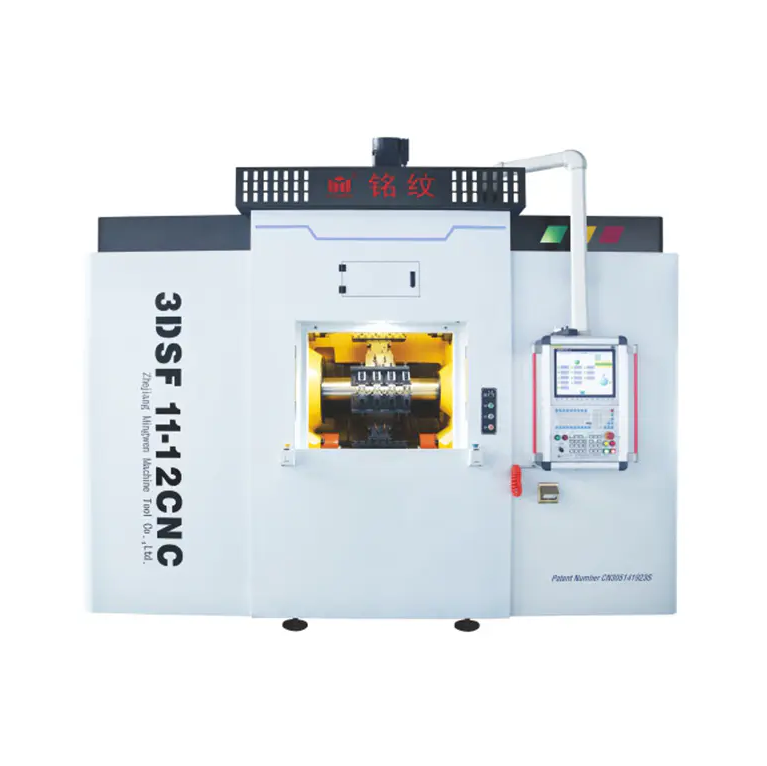
Multi-Operation Machining Concept in Aluminum Processing
Multi-operation machining refers to the ability to complete several machining steps within a single system without repeated manual handling. In aluminum part production, this approach is particularly important because many components require drilling, tapping, milling, chamfering, and surface finishing.
Rotary transfer systems are designed with multiple stations arranged in a circular layout. Each station performs a specific machining task. As the workpiece moves step by step through the system, different operations are completed in sequence. This structure reduces the need for transferring parts between separate machines, which helps maintain consistency across production cycles.
Aluminum materials are often chosen for their light weight and good machinability, but they also require stable cutting conditions to avoid surface defects. Multi-operation systems help maintain uniform machining conditions across all steps.
Advantages in Aluminum Component Manufacturing
In aluminum processing environments, rotary transfer systems provide several functional advantages:
- Continuous machining flow without repeated setup changes
- Reduced dependency on multiple standalone machines
- Stable cycle rhythm across production shifts
- Consistent machining conditions across stations
These characteristics are particularly useful for components that require multiple holes, threaded features, and precision surfaces within a single part.
Typical aluminum parts processed in such systems include housings, connectors, valve structures, and structural brackets. These components often require coordinated machining steps to ensure alignment between features.
Process Integration and Station Coordination
A rotary transfer system is built around coordinated station functions. Each station is assigned a defined machining role. The coordination between stations is essential to maintain part stability and machining continuity.
Common station operations may include:
- Rough drilling
- Fine drilling
- Tapping
- Milling of flat surfaces
- Chamfering edges
- Final finishing
Because all operations are completed within a single system, part repositioning errors are reduced. This contributes to stable dimensional results across production batches.
In aluminum machining, chip control is another important consideration. Proper evacuation of chips helps prevent surface scratches and tool interference. Cooling systems are often used to maintain stable cutting conditions.
Component Complexity in Aluminum Applications
Modern aluminum components are not limited to simple shapes. Many parts include multiple surfaces, angled features, and intersecting holes. These structures require coordinated machining steps to ensure correct alignment.
Rotary transfer systems support this requirement by dividing complex machining tasks into multiple controlled stages. Each stage focuses on a specific feature, reducing the burden on a single machining step.
This approach is particularly suitable for applications where repeated part geometry is required over long production cycles.
Relationship with Gas Appliance Manufacturing
While aluminum processing focuses on lightweight structural components, gas appliance manufacturing involves different material types and functional requirements. In this field, the Rotary Transfer Machine for Gas Appliances is commonly used for brass and alloy components that require stable sealing and flow control features.
Although the material and application differ, both systems rely on similar principles:
- Multi-station machining coordination
- Controlled dimensional accuracy
- Stable production cycles
- Reduced handling between operations
Gas appliance components often include valve bodies, connectors, and regulators. These parts require consistent machining of sealing surfaces and threaded sections, which can also benefit from multi-operation transfer systems.
Production Stability and Industrial Application Scope
In industrial production environments, rotary transfer systems are often selected for medium to high volume manufacturing scenarios where consistency is important. Aluminum parts benefit from stable cutting conditions, while gas appliance components require reliable sealing performance.
The shared requirement between these applications is process stability. By distributing machining tasks across multiple stations, rotary systems help maintain consistent output conditions.
This structure supports manufacturing environments where repeated production cycles are required over extended periods.

- No.1-2,24th Street, Eastern New District, Wenling City.Zhejiang Province
-
+86-13906540425
+86-13566858277
+86-576-87168388
+86-13757649712 - +86-576-87168398
- [email protected]
[email protected]
 Privacy