


 русский
 Español
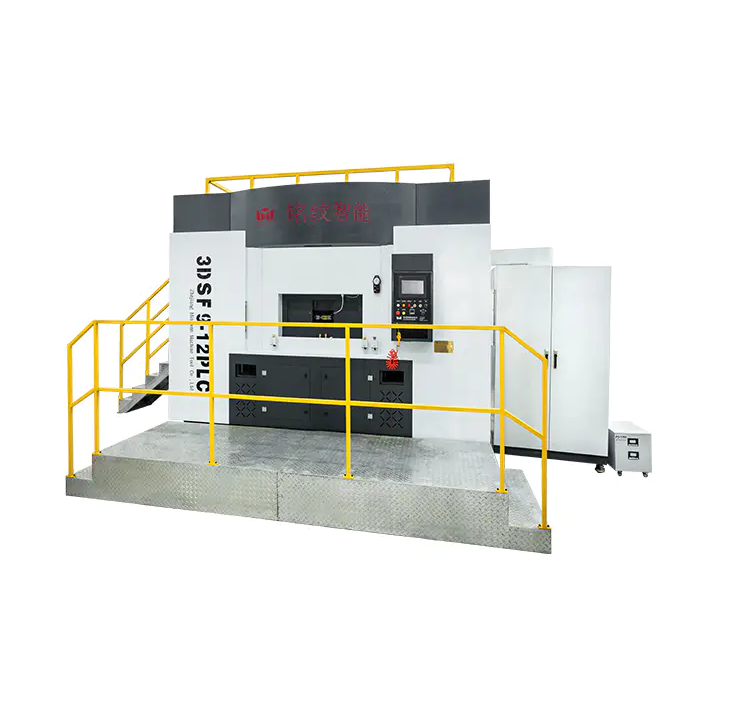
Rotary Transfer Machine For Aluminum Parts Handles Complex Component Designs in Industrial Production
Manufacturing industries continue to shift toward more integrated and function-dense product structures. Aluminum components, in particular, are increasingly designed with multi-feature geometries that combine structural strength, fluid control, and assembly compatibility within a single part. Within this development trend, the Rotary Transfer Machine for Aluminum Parts is often used to support structured machining processes involving multiple coordinated operations.
In parallel, Rotary Transfer Machine For Gas Appliances is widely used in gas system manufacturing environments where components require stable sealing interfaces, controlled flow paths, and consistent threaded structures. Although the two applications serve different industrial needs, both rely on repeatable machining accuracy and structured process flow.
Increasing Structural Complexity in Aluminum Components
Aluminum parts used in industrial systems are no longer limited to simple brackets or housings. Many designs now include intersecting channels, multi-angle drilling positions, and precision mounting interfaces.
These structures introduce several machining challenges:
- Multiple surfaces requiring coordinated alignment
- Complex hole distribution across different orientations
- Tight dimensional relationships between functional features
- Need for repeatable positioning across production batches
Traditional single-operation machining methods may require multiple setups, increasing variation between processes. Multi-station systems provide a more continuous approach.
Role of Rotary Transfer Systems in Complex Machining Tasks
Rotary transfer machines divide machining into a series of structured operations. Each station performs a dedicated function, allowing complex geometries to be processed step by step.
Typical operations include:
- Multi-angle drilling
- Precision milling of functional faces
- Thread forming and tapping
- Repositioning-free feature machining
- Surface finishing operations
By distributing tasks across stations, the system reduces the need for repeated clamping and manual repositioning. This contributes to more stable geometric relationships between features.
Fixture Design and Positioning Control
When machining complex aluminum parts, fixture design becomes an important factor. Proper fixturing ensures that each part remains stable throughout the full machining cycle.
Key considerations include:
- Consistent reference positioning across all stations
- Secure clamping without deformation
- Alignment between machining axes and part geometry
- Support for rapid transfer between stations
Rotary transfer systems rely on precise indexing to move parts from one station to the next. This indexing structure helps maintain positional accuracy even when multiple operations are involved.
Suitable Component Types in Aluminum Applications
Complex aluminum components processed in rotary systems often include:
- Multi-port housings
- Integrated connector blocks
- Lightweight structural frames
- Fluid distribution components
- Mechanical interface assemblies
These parts typically require multiple machining features that must remain accurately aligned after production.
Connection to Gas Appliance Manufacturing Requirements
In gas appliance production, component design also involves multiple machining requirements, although the focus is often on sealing and flow stability rather than structural integration.
Rotary Transfer Machine for Gas Appliances is commonly applied in the production of valve bodies, connectors, and control elements. These components often require:
- Precise sealing surfaces
- Controlled thread engagement
- Consistent internal channels
- Stable dimensional repeatability
While aluminum components focus more on structural integration, gas appliance components focus more on functional safety and sealing performance. However, both rely on multi-stage machining processes that can be efficiently managed through rotary transfer systems.
Process Stability in Multi-Feature Machining
Complex machining requires consistent process control across all stages. Rotary systems help maintain stability by ensuring that each operation is performed under controlled conditions.
This reduces variation between features and helps maintain consistent geometry across production batches.
Chip evacuation and cooling management are also important in aluminum machining. Proper chip flow prevents interference between tools and surfaces, supporting stable cutting conditions throughout the cycle.
Industrial Use in Repetitive Production Cycles
Rotary transfer systems are particularly suited for production environments where the same component is manufactured repeatedly over extended periods. This allows machining parameters to be stabilized and adjusted for consistent output.
In such environments, both aluminum and gas appliance components benefit from reduced handling and structured operation flow.
Role in Modern Manufacturing Systems
As product structures become more complex, manufacturers seek machining solutions that can handle multiple operations without interrupting production flow. Rotary transfer systems offer a structured approach that supports this requirement.
By dividing complex machining tasks into controlled steps, these systems help maintain consistent relationships between functional features, even in parts with intricate designs.

- No.1-2,24th Street, Eastern New District, Wenling City.Zhejiang Province
-
+86-13906540425
+86-13566858277
+86-576-87168388
+86-13757649712 - +86-576-87168398
- [email protected]
[email protected]
 Privacy