


 русский
 Español
Rotary Transfer Machine For Gas Appliances Supports Brass Component Machining in Stable Production Flow
Gas appliance manufacturing relies on components that must maintain consistent flow control and sealing behavior during long-term use. Parts such as valve bodies, connectors, injectors, and regulators are commonly produced in brass materials. In this context, Rotary Transfer Machine For Gas Appliances is frequently used to support structured machining processes for brass components that require stable dimensional control.
At the same time, aluminum-based industrial parts also rely on similar multi-step machining concepts. The Rotary Transfer Machine for Aluminum Parts is often applied in production environments where multiple operations need to be completed within a continuous cycle. Although the materials and end-use applications differ, both types of manufacturing share the need for repeatable machining accuracy and controlled process flow.
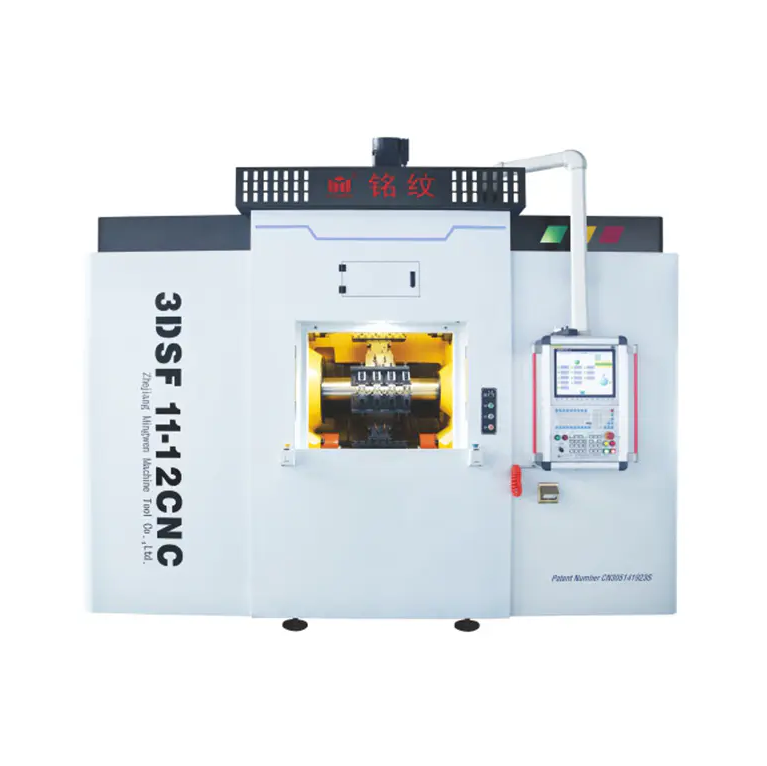
Brass Machining Characteristics in Gas Appliance Components
Brass is widely used in gas systems because of its good machinability and stable mechanical behavior. However, machining still requires careful control to ensure consistent quality across production batches.
Key considerations include:
Stable chip formation during cutting
Controlled threading quality
Reliable sealing surface finish
Avoidance of burr formation on functional edges
Rotary transfer systems help manage these factors by dividing machining into structured stages, reducing variability between operations.
Multi-Station Machining Process
Rotary transfer machines operate through multiple fixed stations arranged in a circular sequence. Each station performs a specific machining task, allowing continuous processing without repeated manual handling.
Common operations include:
Drilling internal flow passages
Precision hole machining
Thread tapping for connectors
Facing sealing surfaces
Chamfering and edge finishing
This structure supports consistent alignment between features and reduces repositioning errors.
Typical Gas Appliance Brass Parts
Brass components processed in rotary systems often include:
Gas valve bodies
Injector nozzles
Flow regulators
Connector fittings
These parts require stable internal geometry and consistent sealing interfaces to ensure safe and reliable gas flow.
Sealing and Thread Quality Requirements
Sealing surfaces and threaded sections are critical in gas appliance components. Any inconsistency in these areas can affect assembly performance and functional reliability.
Important machining factors include:
Controlled surface roughness in sealing areas
Accurate thread depth and engagement
Smooth transitions between machined surfaces
Burr-free edge finishing
Rotary transfer systems allow these operations to be separated into dedicated stations, helping maintain process stability.
Chip Control and Process Stability
Although brass is relatively easy to machine, chip management is still important for maintaining stable production conditions. Accumulated chips can affect surface quality and tool performance.
Rotary systems typically support:
Continuous chip evacuation
Station-specific cutting tool control
Stable cooling application during machining
These factors help maintain consistent operation over long production cycles.
Connection with Aluminum Part Manufacturing
In addition to gas appliance components, aluminum parts are also widely processed using rotary transfer systems. The Rotary Transfer Machine for Aluminum Parts is commonly applied to housings, connectors, and structural components requiring multiple machining operations.
Both aluminum and brass applications share:
Multi-step machining requirements
Continuous production flow
Stable dimensional control
Reduced manual handling
The main difference lies in focus: aluminum parts emphasize chip control and structural machining, while gas appliance parts emphasize sealing and connection reliability.
Role in Production Line Integration
Rotary transfer machines are often integrated into larger production systems. In gas appliance manufacturing, they may be positioned after casting or forging processes and before assembly or testing stages.
This allows:
Continuous material flow between processes
Reduced manual transfer steps
More stable machining rhythm
Such integration supports consistent output over repeated production cycles.
Rotary transfer systems provide a structured machining approach for brass gas appliance components by distributing operations across multiple stations. This helps maintain stable threading, sealing quality, and dimensional consistency, while also supporting continuous production requirements in industrial environments.

- No.1-2,24th Street, Eastern New District, Wenling City.Zhejiang Province
-
+86-13906540425
+86-13566858277
+86-576-87168388
+86-13757649712 - +86-576-87168398
- [email protected]
[email protected]
 Privacy