


 русский
 Español
Rotary Transfer Machine Multi-Spindles Applications in Automotive and Industrial Components
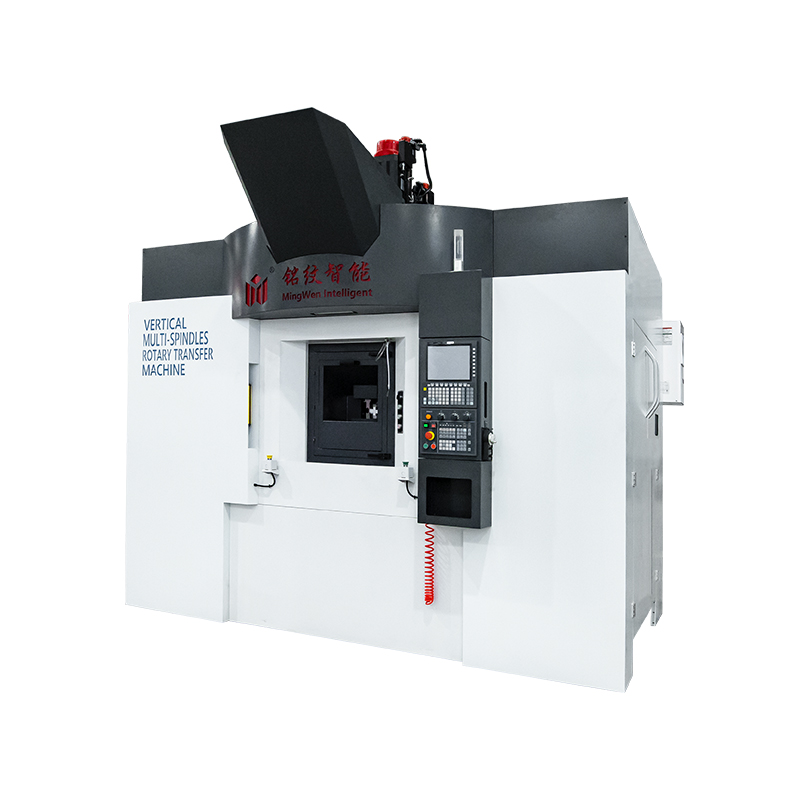
Across industries where precision, volume, and reliability are required, Rotary Transfer Machine Multi-Spindles provide a manufacturing solution. Their ability to perform multiple operations in a single handling makes them particularly suited for complex parts found in demanding sectors. This article highlights the application of this technology in the production of automotive and industrial components.
Powering the Automotive Sector
The automotive industry, with its vast production scales and stringent quality requirements, is a primary field for Rotary Transfer Machine Multi-Spindles. These machines are instrumental in creating critical parts for various vehicle systems. Within powertrains, they manufacture components such as fuel injection bodies, sensor housings, and various connectors and plugs essential for engine management. For transmission and braking systems, parts like valve bodies, pistons for hydraulic units, and precision pins are often produced on these multi-spindle systems.
As vehicle technology evolves, the applications adapt. Components for electric power steering systems, air conditioning compressors, and elements of new energy vehicle battery and cooling systems also benefit from the multi-process capability of Rotary Transfer Machine Multi-Spindles. The common thread is the need for a large quantity of parts with complex geometries and reliable interchangeability, which aligns with the strengths of this technology.
Building Blocks for Industrial Machinery
Beyond automotive, Rotary Transfer Machine Multi-Spindles are foundational in producing components for broader industrial equipment. The fluid power industry relies on them for manufacturing the intricate bodies of pneumatic and hydraulic valves, connectors, and pump elements. These parts frequently contain networks of intersecting drilled passages, threaded ports, and sealed surfaces—all of which can be completed in one setup on a multi-spindle machine.
General precision engineering sectors utilize this technology for parts like lock cylinders, fittings for instrumentation, and drive components. The capacity to combine turning, drilling, milling, and threading ensures that these industrially hardened parts meet specifications for fit, function, and durability. The technology supports sectors ranging from appliance manufacturing to specialized tooling, wherever a high volume of metal components with multiple features is needed.
A Closer Look at a Typical Component
Consider the example of a common hydraulic valve block. This part may start as a cylindrical metal blank. On a Rotary Transfer Machine with Multi-Spindles, the one station might face and center drill the part. Subsequent stations could drill the main axial bore, machine external diameters and grooves, and drill a series of lateral ports that must intersect the main bore accurately. Later stations might tap threads into these ports, mill mounting flats, and finally, deburr the part. This entire sequence, involving perhaps a dozen different operations, is completed automatically as the part indexes from one spindle to the next, resulting in a finished valve block ready for assembly. This example underscores the process integration that eliminates cumulative errors from multiple handlings.
Rotary Transfer Machine Multi-Spindles find extensive use in fields that depend on the volume production of multifaceted metal parts. In the automotive industry, they contribute to building reliable vehicles by manufacturing key precision components. Across industrial machinery, they enable the creation of the complex fluid power and mechanical parts that form the backbone of modern equipment. The technology’s value is demonstrated in its application to real-world components, where its multi-operation, single-clamping approach ensures consistency and efficiency in manufacturing.

- No.1-2,24th Street, Eastern New District, Wenling City.Zhejiang Province
-
+86-13906540425
+86-13566858277
+86-576-87168388
+86-13757649712 - +86-576-87168398
- [email protected]
[email protected]
 Privacy