


 русский
 Español
Rotary Transfer Machine Multi-Spindles Working Principles and Machining Capabilities
Rotary Transfer Machine Multi-Spindles represent a cornerstone technology for the series production of precision components. Their design philosophy centers on achieving high output while maintaining consistent part quality. This article explains the operating principles of these machines and details the broad spectrum of machining capabilities they offer to manufacturers.
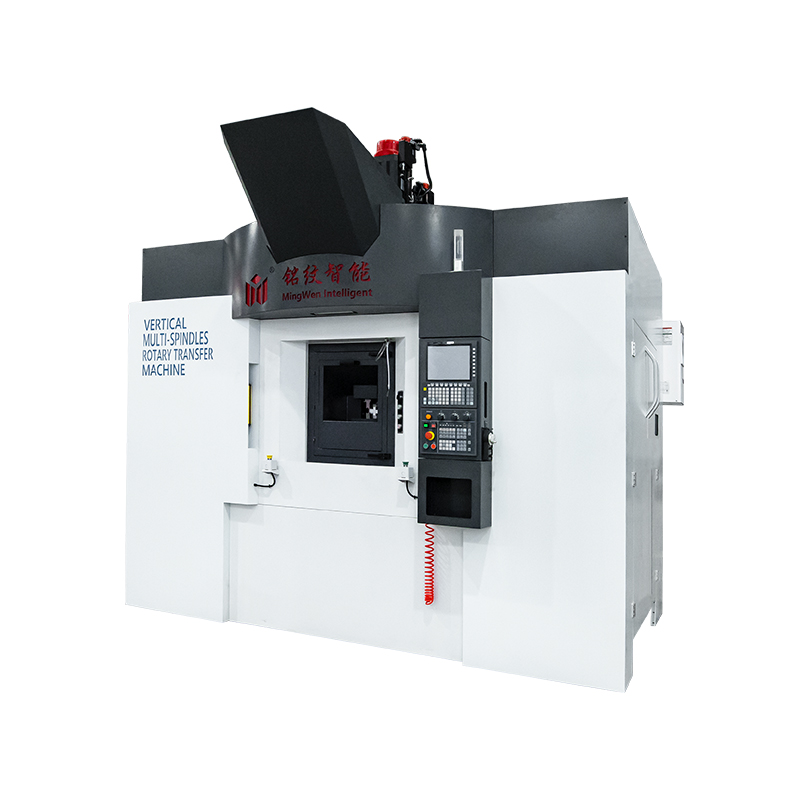
The Synchronized Dance of the Rotary Transfer Machine
At the heart of a Rotary Transfer Machine Multi-Spindles lies a synchronized sequence of movements. The primary action is the indexing of a central drum or table. This table holds multiple workpieces, each secured in an individual spindle. After the machining cycle at one station is complete, the table indexes precisely, moving all workpieces simultaneously to the next station. This continuous rotary transfer of components between workstations is the defining characteristic of the system.
A key feature is that all spindles operate in parallel. While the table is indexed and locked in position, machining actions occur concurrently at every station. Each spindle can be equipped with different tools and programmed for distinct operations. This parallel processing capability is what allows a Rotary Transfer Machine Multi-Spindles to complete a wide range of tasks in a time frame equivalent to the cycle time of its longest individual operation. The coordination of the rotary transfer, spindle movements, and tool actions is typically managed by a dedicated control system, ensuring harmony across the entire machining process.
A Comprehensive Suite of Integrated Machining Operations
The modular design of workstations enables a Rotary Transfer Machine with multi-spindles to integrate numerous machining processes into a single setup. This transforms raw material, often a bar stock or pre-formed blank, into a finished part without intermediate handling.
Standard machining functions are readily incorporated. These include turning operations to create diameters and faces, drilling and boring for hole creation, milling for flats and contours, and tapping for internal threads. The integration extends beyond these basics. Machines can be configured for specialized tasks such as thread rolling for strong, smooth external threads, reaming for precise hole finishing, and broaching for keyways or splines. Furthermore, secondary operations like marking, deburring, or even in-process gauging for quality control can be integrated into the sequence. This consolidation of processes is a significant advantage, enabling the production of complex components in a streamlined flow.
Defining Performance and Application Suitability
Understanding the working principles naturally leads to evaluating what these machines can produce. Their performance is framed by several interconnected parameters that define their application scope. The physical capacity, including the diameter of stock it can accept and the travel lengths for tools, determines the size of parts that can be manufactured.
Furthermore, the consistent accuracy of the index mechanism and the rigidity of the entire structure contribute to the geometric precision of the machined parts. Features like concentricity between different turned diameters or the positional accuracy of drilled holes benefit directly from the single-clamping principle. The number of spindles and workstations directly influences the complexity of the part that can be completed in one cycle, while the power and speed of the spindles affect the materials that can be machined effectively.
The Rotary Transfer Machine Multi-Spindles operates on a principle of coordinated, parallel processing. By understanding its indexed rotary transfer and simultaneous multi-spindle action, manufacturers can appreciate how it achieves notable production rates. When combined with its ability to host a wide array of machining operations in one continuous cycle, this technology presents a cohesive solution for the volume manufacturing of intricate components. Evaluating a part's suitability for this method involves considering its geometry, required tolerances, and annual volume against the machine's synchronized workflow and integrated capabilities.

- No.1-2,24th Street, Eastern New District, Wenling City.Zhejiang Province
-
+86-13906540425
+86-13566858277
+86-576-87168388
+86-13757649712 - +86-576-87168398
- [email protected]
[email protected]
 Privacy