


 русский
 Español
Rotary Transfer Machine Multi-Spindles: Balancing Speed, Accuracy, and Flexibility
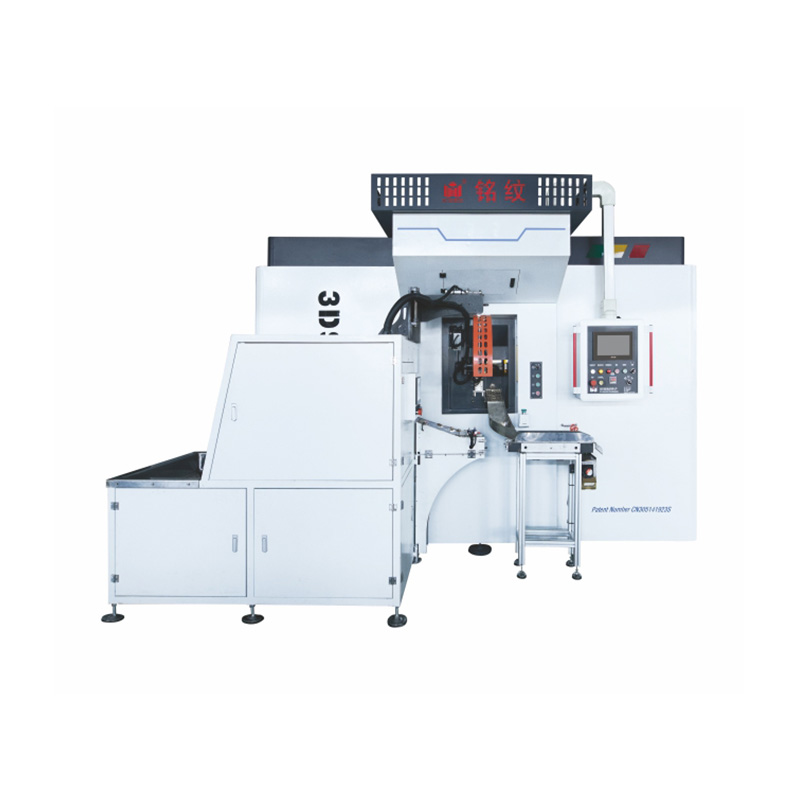
Selecting production equipment often involves carefully weighing priorities between output speed, part accuracy, and the ability to accommodate different products with minimal disruption. Rotary Transfer Machine Multi-Spindles are specifically engineered to address these three critical aspects concurrently, eliminating the need for manufacturers to make excessive trade-offs.
The Interplay of Core Manufacturing Objectives
In modern production environments, speed, accuracy, and flexibility are deeply interconnected considerations that directly impact a manufacturer’s competitiveness. A very fast machining process may require unavoidable compromises on the intricacy of part features or the tightness of dimensional tolerances, potentially to increased scrap rates or rework. Conversely, a process designed exclusively for exceptional accuracy might involve slower operational cycles, more meticulous setup procedures, or specialized tooling that limits overall throughput. Similarly, a system built for rapid changeovers between different part types may have a more complex design than one optimized solely for running a single part indefinitely at efficiency. The primary challenge for manufacturers is to find a solution that offers a workable equilibrium—one that provides sufficient performance in all three areas to meet both business goals (such as cost-effectiveness and on-time delivery) and technical requirements (including part quality standards).
Technological Features that Enable Balance
Rotary Transfer Machine Multi-Spindles incorporate a range of specific design features that help harmonize these often competing objectives. Their inherent parallel processing capability—where multiple machining operations are performed on several parts simultaneously—provides a foundational level of productivity (speed) that is difficult for traditional sequential machining systems to match. This parallel approach eliminates the bottlenecks associated with processing one part at a time, significantly boosting overall throughput without sacrificing core functionality.
Additionally, the robust rigidity of the machine’s base structure and the high precision of its indexing mechanism create a stable and consistent platform for achieving reliable part dimensions (accuracy). The indexing system, which positions parts between machining stations with minimal deviation, ensures that each operation is performed at the exact correct location, reducing dimensional variation across production runs. High-quality linear guides and spindle bearings further enhance stability, minimizing vibration that could otherwise compromise part precision.
Regarding flexibility, modern implementations of Rotary Transfer Machine Multi-Spindles have seen significant technological advancements. While traditional machines often relied on dedicated mechanical cams that required time-consuming reconfiguration for different parts, many contemporary models employ servo-driven axes or a hybrid combination of servo and cam technologies. This allows for tool paths, machining cycles, and spindle speeds to be easily adjusted through software programming, facilitating a quick switch to a different part program with minimal manual intervention. Additionally, innovative concepts like quick-change tooling blocks, preset fixture modules, and standardized interface systems can drastically reduce the physical changeover time between production runs, enhancing the machine’s adaptability to varied production schedules and small-batch manufacturing demands.
Operational Benefits of a Balanced Approach
Achieving a suitable balance among speed, accuracy, and flexibility delivers tangible operational advantages that directly improve a manufacturer’s bottom line. It allows a production facility to respond more effectively to fluctuating market demands that may call for varying batch sizes, from high-volume runs to smaller custom orders. A balanced machine can efficiently run a long series of one component to meet large-scale demand and then be reconfigured within a reasonable timeframe to produce a different component, thereby protecting the initial investment in the equipment and its utility.
This versatility also improves overall equipment utilization over time, as the machine is not limited to a single part or production task. Furthermore, maintaining dependable accuracy at a productive rate ensures that part quality is sustained consistently throughout a production run, reducing scrap, minimizing rework costs, and supporting supply chain reliability—critical factors in building trust with customers and meeting delivery commitments.
Rotary Transfer Machine Multi-Spindles should not be viewed as excelling in only one aspect of manufacturing performance. Instead, their true value lies in their unique capacity to bring together productive output, dependable precision, and a practical degree of adaptability. Through their inherently efficient parallel-processing architecture and the seamless integration of modern control systems, tooling concepts, and automation features, these systems offer manufacturers a balanced solution tailored to today’s dynamic production needs. This balance is particularly important for operations that need to maintain consistent quality and output while also managing a diverse range of components, making the technology a well-considered choice for high-performance, flexible manufacturing environments.

- No.1-2,24th Street, Eastern New District, Wenling City.Zhejiang Province
-
+86-13906540425
+86-13566858277
+86-576-87168388
+86-13757649712 - +86-576-87168398
- [email protected]
[email protected]
 Privacy