


 русский
 Español
Aggregate Machine For Pipe Fitting: Achieve Drilling and Tapping in One Pass
Integrated Machining for Modern Workshops
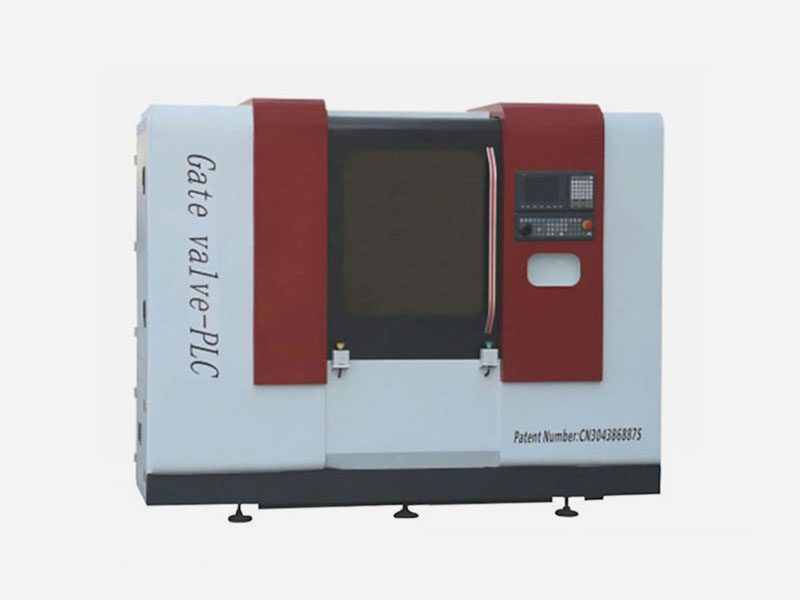
Aggregate Machine for Pipe Fitting has become an essential solution for manufacturers seeking to combine drilling and tapping within a single clamping cycle. As pipe fitting demand continues to grow across plumbing, HVAC, fluid control, and industrial piping sectors, workshops are under pressure to deliver consistent threaded components with shorter production cycles. At the same time, many producers of valves are also upgrading to an Aggregate Machine For Brass Valve to achieve similar integration in valve body processing. The focus is no longer on isolated machining steps but on unified operations that enhance workflow continuity.
The Challenge of Multi-Step Processing
Traditional pipe fitting production often involves separate machines for drilling, tapping, chamfering, and facing. Each step requires repositioning the workpiece, which increases handling time and the risk of alignment deviation. When fittings such as elbows, tees, or couplings require threaded holes on multiple surfaces, the complexity multiplies.
Multiple clamping processes can result in:
- Inconsistent thread alignment
- Surface marks from repeated handling
- Increased operator dependency
- Workflow interruptions between machines
In high-volume environments, these inefficiencies accumulate and affect the overall production rhythm.
One-Pass Drilling and Tapping Concept
The core concept behind one-pass machining is simple: complete multiple operations during a single fixture setup. An Aggregate Machine for Pipe Fitting integrates drilling spindles and tapping units in a coordinated arrangement. Once the component is secured, drilling and threading are executed in a synchronized sequence.
This approach provides several structural advantages:
- Reduced repositioning
- Stable thread concentricity
- Streamlined tool paths
- Improved repeatability
A similar configuration is often applied in an Aggregate Machine for Brass Valve, where valve bodies require accurate threaded ports and internal passages processed without repeated manual intervention.
Multi-Spindle and Multi-Station Configuration
To enable one-pass performance, the machine typically features:
- Multiple spindle heads are positioned according to the fitting geometry.
- Dedicated drilling and tapping units
- Rigid base construction
- Coordinated feed systems
Each spindle operates within a controlled motion range, ensuring consistent penetration depth and thread formation. The layout can be customized to accommodate different pipe fitting shapes, including straight connectors, reducing couplings, and cross fittings.
In brass valve production, the same structural logic supportsthe processing of inlet, outlet, and side ports in a unified cycle.
Integrating drilling and tapping brings visible workflow improvements:
- Shorter cycle transitions
- Reduced manual transfer
- Smoother line balancing
- Lower cumulative alignment deviation
Because operations are centralized, operators can supervise multiple machines simultaneously. This contributes to a more organized workshop layout and clearer production planning.
Material Compatibility
Pipe fittings are manufactured from a wide range of materials, including:
- Carbon steel
- Stainless steel
- Brass
- Aluminum alloys
The machine structure is designed to handle varying cutting characteristics. When processing brass components for valve applications, chip evacuation and lubrication systems play a key role in maintaining thread integrity.
Application Expansion Toward Valve Manufacturing
Workshops that already operate an Aggregate Machine for Pipe Fitting often extend automation concepts into valve production. An Aggregate Machine FforBrass Valve allows manufacturers to maintain a consistent machining philosophy across product categories, simplifying operator training and maintenance routines.
One-pass drilling and tapping represent a practical shift toward integrated machining. By combining processes within a single clamping cycle, manufacturers gain greater workflow continuity and consistent component geometry. Whether applied to pipe fittings or adapted into an Aggregate Machine for Brass Valve, the integrated approach supports scalable and stable manufacturing operations.

- No.1-2,24th Street, Eastern New District, Wenling City.Zhejiang Province
-
+86-13906540425
+86-13566858277
+86-576-87168388
+86-13757649712 - +86-576-87168398
- [email protected]
[email protected]
 Privacy